
HOW TO GET PRIORITY BOARDING ON AIRPLANES
At Little to No Cost - Even if You Don't Travel Often
OPTIMIZE YOUR CARD PORTFOLIO
Max Plastic
6/29/20268 min read


Does this seem familiar? Perhaps? Does it have to be this way? Of course not. Through the help of the right credit card, your travel can be more comfortable and less expensive.
This article includes:
Travel Card Landscape
How to Choose the Right Card
Card Benefit Comparison
Airline Benefits
Priority Boarding
Checked Bags
Inflight Purchases
Flight / Travel Credits and Discounts
Other Benefits
Points Multipliers
Max's Take
Credit Card Comparison Table
Travel Card Landscape
Every airline has at least one credit card that provides status and benefits with them. They are designed to generate loyalty. The annual fee for the cards vary, and greater benefits generally mean higher fees, with some cards charging over $500.
Since this article is focused primarily on priority boarding for the infrequent traveler, I’ll focus on the cards with the lowest annual fee that enables priority boarding with each major domestic airline. The annual fees for these cards range from $95 to $150 (though a few waive the fee for the first year), and most bring additional benefits to help offset much or even all the annual fee.
These cards are:
American Express Delta Gold
Citibank AAdvantage Platinum Select
Chase United MileagePlus Explorer
Bank of America Atmos Ascent
Chase Southwest Plus
Barclays JetBlue Plus
How to Choose the Right Card
The objective in choosing the right card should be to pick the one from which you can extract maximum value. Whether you travel frequently or not, the first consideration in selecting the right card is to think through your point of embarkation, and likely destinations, to know which airline is most likely to have flights that work for you.
A traveler based in Atlanta might benefit most from a Delta card; one based in Baltimore might benefit more from a Southwest card, and one based in Chicago might want a United card as each of those airports are hubs for those respective airlines.
Where do your loved ones live? Do you have a favorite place to visit?, somewhere you’ve always wanted to go? Even if your local airport is a hub for a particular airline, they might not fly directly to where you want to go.
This should help you narrow the list to a couple of cards. The next consideration would then be the cost and benefits of those particular cards. If the benefits align with your current lifestyle, then you are more likely to use them without changing any habits, making a card more valuable to you. If you would need to change your spending habits to take advantage of any particular benefit, then that benefit doesn’t truly apply to you and should not be considered.
In the end, you should have be able to find a card that will give you the boarding status you seek, and whose benefits come close to, or may even exceed, the annual cost of the card.
Card Benefit Comparison
Airline Benefits
Priority Boarding
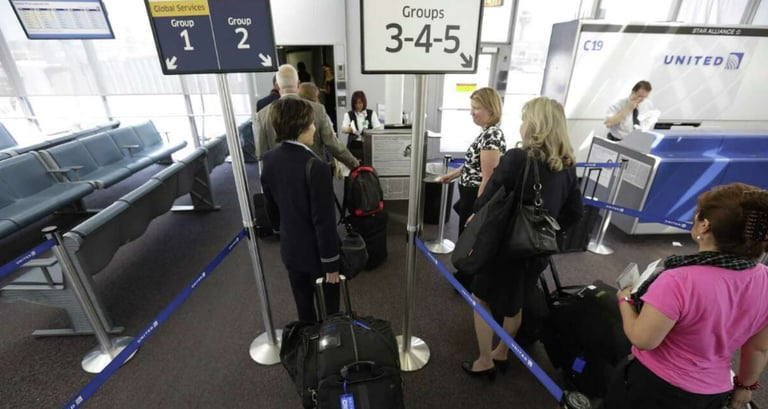
Priority Boarding means some passengers get to board the plane before others. The cards reviewed here generally provide boarding ahead of most economy class passengers, and behind premium cabin and flyers with elite status on that airline. Each card provides priority boarding for at least the cardholder except the JetBlue Plus card. If priority boarding is desired on JetBlue, the cardholder must have a JetBlue Premier card, which provides additional benefits and carries a $499 annual fee, which doesn’t make sense for the infrequent traveler.
Introduction
So, you’re an infrequent traveler looking forward to hopping on a plane to visit a loved one or to a vacation destination. The plane starts boarding passengers by group. You look at your ticket and see they’re nowhere near your group yet.
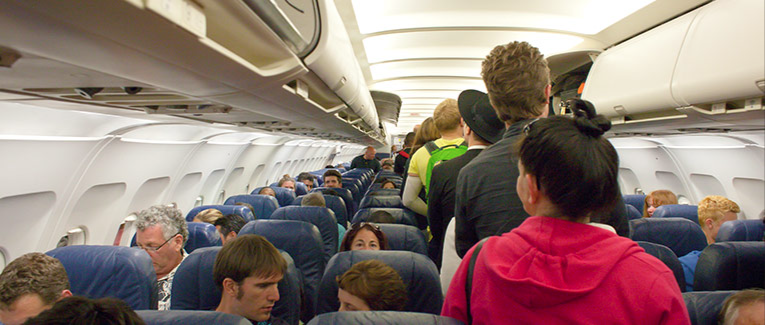
Looking up, it seems the entire plane is filling up; entire families and others you judge cannot be frequent fliers, yet there they are, boarding the plane ahead of you.
Your group is finally called, and as you board the gate attendant informs you that you must gate check your carry-on because there is no room left in the overhead bins. You check your carry-on, and make your way to your row and squeeze into your middle seat, which you selected because you didn’t want to pay the additional $50 for an aisle seat…not after the airline already pinched you for $50 for your checked suitcase.

Credit Card Comparison Table

The differences between the other cards is the number of passengers traveling together that can also receive the cardholder benefit. United sets no limit to the number of passengers who can join the cardholder in priority boarding. Delta and Southwest allow 8 traveling companions to board early with the cardholder. Atmos allows 6, and AAdvantage allows 5.
Checked Bags
Each airline allows for at least one free checked bag per cardholder per flight. This benefit alone can provide a value of $30 - $50 each flight. Southwest, however, provides a free checked bag for up to 8 travel companions as well. Atmos provides the benefit for up to 6 travel companions. AAdvantage for up to 4, JetBlue for up to 3, and United for 1. Delta allows for 2 free checked bags on domestic flights (which is the same as allowing one for a travel companion, right?). Depending on the size of the group traveling and the number of checked bags, this can be a valuable benefit indeed.


Inflight Purchases
Wifi?, snack?, drink? Depending on the airline, the flight duration and your seating class, these may or may not be included in the ticket price. Credit cards can take the sting out of inflight charges. JetBlue gives 50% off of these with their Plus card. The United, AAdvantage and Southwest cards give 25% off, while the Atmos and Delta cards give 20% off.


Flight / Travel Credits and Discounts
All cards provide some sort of discount or credit that can be used toward flights, though a few must be earned through spending on the card.
Southwest awards 3,000 points each anniversary just for having the card. Depending on how they’re used, that can be worth $30 - $60 dollars. JetBlue awards 5,000 points each anniversary. Delta, United and JetBlue offer discounts of 15%, 10%, and 10% respectively when redeeming points to purchase flights.
Delta and United offer a $200 and a $100 flight credit respectively after spending $10,000 in a calendar year on the card. This is a reasonable spend to achieve, and these credits can be used toward not only the cost of a ticket, but also the cost of a preferred seat on the flight. AAdvantage offers a $125 travel credit after spending $20,000 in a calendar year, which is a bit more of a stretch. Atmos offers a $99 companion fare for one flight after spending only $6,000 in a calendar year. The required spend is less and the value can vary, but it is less flexible and encourages more spending as the cardholder fare must be paid.
Other Benefits
Other than the checked bags and travel credits listed above, these additional benefits are ways to reduce the impact of the annual card fees. Delta, JetBlue, and United each offer a $100 credit annually for booking hotels or vacation stays on their sites, though the United credit is broken into two $50 credits each 6 months. Booking through their sites merits a validation check to ensure there are not cheaper alternatives by booking directly. A $100 credit on a hotel charge that is elevated by $100 is no savings at all.
Delta and United also offer monthly rideshare credits of $10 and $5 respectively. This is a benefit of up to $120 annually for Delta cardholders if rideshare is frequently used, and almost entirely offsets the card’s annual fee on its own.


AAdvantage offers 6 Turo credits of $30 per year, for a total of up to $180. This appears to offset more than the annual fee of the card, but Turo is a more expensive way to rent than going through the standard rental companies.
United offers three additional benefits that help to make its Explorer card stand apart from the others, but caution should be used when weighing the value of these benefits.
First, they offer a credit of up to $120 for Global Entry / TSA PreCheck membership. This can make getting through airports faster and easier. Membership is good for 5 years, and United only allows the credit once every 4 years, so the maximum annual benefit of this credit is only $30. That being said, as a more frequent traveler, I wouldn’t like the prospect of not having this membership.
Second, they offer two $25 credits per year on Avis or Budget car rentals through the United site. Again, comparing against renting through Avis or Budget directly is recommended before “cashing in” on this credit.
Third, United offers two one-time United Club passes annually. This is a great perk to make a trip much more comfortable by relaxing in a lounge, but it is watered down by how difficult it is to use them. When an airport gets busy, lounges fill up and they begin to deny access to some who normally would have access. Travelers holding one-time passes are the first to be turned away.


Points Multipliers
Of course, a key benefit of each of these credit cards is the ability to earn points which, when enough have been accumulated, can be used for free travel. The table below shows the categories in which each card earns multiple points per transaction, enabling a faster build of points. If the card that best suits you also earns multiple points per dollar spent in categories in which you spend significant dollars, then you have an even better fit. If not, you may want to seek additional cards to better optimize your point earnings.
Max’s Take
Having status with the airline of your choice does not necessarily require you to be a frequent flier. You can also obtain the status that will enable you to board earlier and check bags for free by obtaining the right credit card.
The best card for you depends on the airline you are most likely to fly based on location and likely destinations, and your spending habits. The annual fees for these cards can likely be offset, in whole or in part, through the credits and discounts they offer.
If you’re interested in free guidance to optimize your credit card portfolio and the way you use them, reach out to me at email@maxyourplastic.com
If you liked this article and want to learn more, let me know in which topics you are interested. I’ll be happy to add to the articles I have already posted on my website, maxyourplastic.com
Max Your Plastic
Let your credit cards take you to new places.
Contact us
email@maxyourplastic.com
© 2025. All rights reserved.